


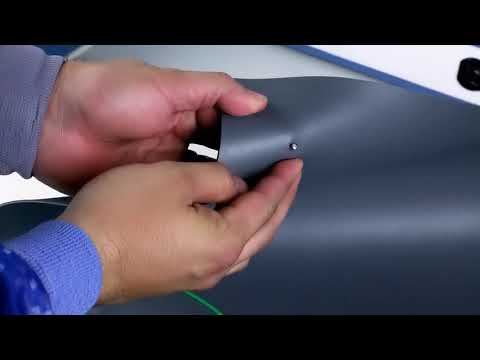


SCS 770071, Table Mat Roll, Rubber, R3, Light Blue, 30 in x 50 ft
SCS 770071, Table Mat Roll, Rubber, R3, Light Blue, 30 in x 50 ft
The SCS 770071 is a 30″ × 50 ft roll of R3 Series dissipative rubber worksurface mat — the standard width for most electronics manufacturing workbenches. Built from high-strength nitrile rubber, it resists solvents, flux, and soldering irons while delivering consistent, humidity-independent electrical performance that meets ANSI/ESD S20.20 worksurface requirements for the life of the mat.
Specifications
| Spec | Value |
|---|---|
| SKU | 770071 |
| Series | SCS R3 |
| Material | 2-layer dissipative nitrile rubber |
| Top Layer Resistance (Rtt) | 1×10⁶ to <1×10⁹ Ω (dissipative) |
| Bottom Layer | Conductive black rubber (<5×10⁵ Ω Rtg) |
| Roll Size | 30″ × 50 ft |
| Color | Light Blue |
| Compliance | ANSI/ESD S20.20, ANSI/ESD STM4.1-2017, ESD TR53 |
| Humidity Dependence | None — consistent performance regardless of ambient humidity |
| Chemical Resistance | Flux, solvents, soldering irons |
| Lot Traceability | Yes |
| Compliance | RoHS 2, REACH lead-free |
| Origin | Made in the USA |
| Stock Location | Canton, MA |
Key Features
- Dissipative Top Layer: 1×10⁶ to <1×10⁹ Ω Rtt — meets ANSI/ESD S20.20 worksurface required limit and ANSI/ESD S4.1 recommendation for contact with ESD susceptible items.
- Conductive Black Bottom Layer: Dedicated conductive layer reduces Rtg and allows use with ESD workstation monitors. Electricals will not drift for the life of the mat.
- Non-Humidity Dependent: Nitrile rubber compound delivers consistent electrical performance regardless of ambient humidity — no seasonal variation.
- Soldering Application Ready: Resists abrasion, tearing, flux, and soldering iron contact.
- Compatible with Continuous Workstation Monitors: Conductive bottom layer supports real-time ground path verification.
- Lot Traceability: Full tracking information for quality control and lifespan documentation.
- RoHS 2 & REACH Compliant: Lead-free, made in the USA.
Frequently Asked Questions
What makes the SCS R3 rubber mat different from vinyl ESD mats?
The SCS R3 is made from high-strength nitrile rubber, which provides non-humidity-dependent electrical performance, superior resistance to solvents and soldering irons, and a dedicated conductive bottom layer for use with continuous workstation monitors. Vinyl mats can be humidity-sensitive and are generally not recommended for soldering applications. The R3 is the preferred choice for electronics assembly and rework stations where chemical and thermal exposure is common.
Is the SCS 770071 compatible with continuous workstation monitors?
Yes. The conductive black bottom layer provides a reliable resistance-to-ground (Rtg) path compatible with continuous workstation monitors verifying both wrist strap and mat ground connections simultaneously — a key requirement for ANSI/ESD S20.20 audit compliance.
Does the SCS R3 mat comply with ANSI/ESD S20.20?
Yes. The 770071 meets the ANSI/ESD S20.20 worksurface required limit, tested per ANSI/ESD STM4.1-2017 and ESD TR53. The top layer resistance (1×10⁶ to <1×10⁹ Ω Rtt) meets both the S20.20 required limit and the ANSI/ESD S4.1 recommendation for contact with ESD susceptible items.
Will the electrical properties of the R3 mat change over time?
No. SCS states that electricals will not drift for the life of the mat on both the top color layer and the conductive black bottom layer. The nitrile rubber compound is inherently dissipative — not surface-treated — so performance is stable across the mat’s service life.
What sizes are available in the SCS R3 series?
The R3 series is available in roll widths of 24″, 30″, 36″, and 48″, all in 50 ft lengths, in both Light Blue and Green. Pre-cut mat kits (24″ × 48″) with grounding hardware are also available. See the full R3 series at MTE Solutions.
Can I use the SCS R3 mat for soldering applications?
Yes. The high-strength nitrile rubber compound is specifically constructed to withstand abrasion, tearing, and use in soldering applications with flux and other chemicals — making it one of the few ESD mat materials suitable for active soldering and rework stations.


