


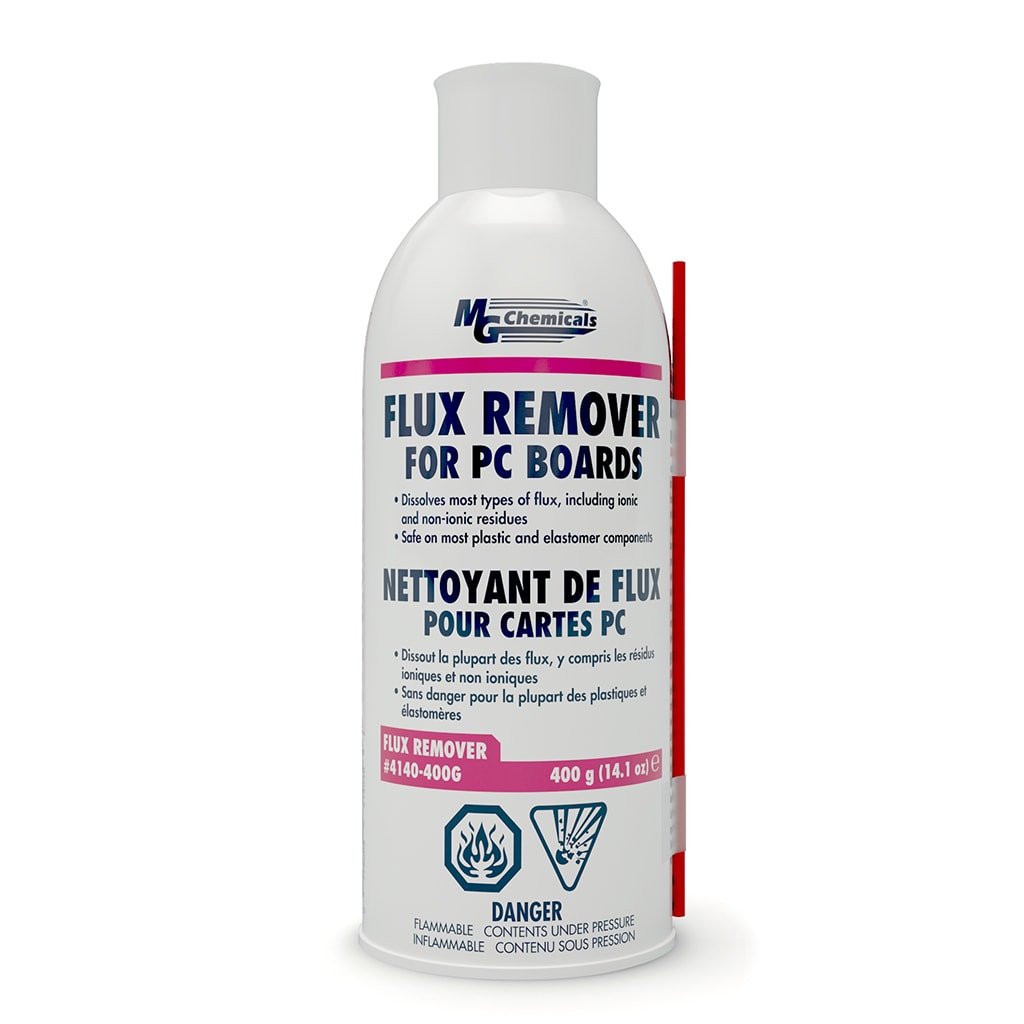
MG Chemicals, 4140-400G, Flux Remover for PC Boards, 14 oz., Aerosol / Case of 10
MG Chemicals, 4140-400G, Flux Remover for PC Boards, 14 oz., Aerosol / Case of 10
MG Chemicals 4140-400G Flux Remover for PC Boards combines ethyl alcohol, isopropanol and ethyl acetate in a convenient aerosol for electronics cleaning. Its non-corrosive, non-conductive formulation has a moderate dry time and is designed to remove rosin, non-rosin and no-clean flux residues, along with ionic contamination. This listing is for a case of 10 cans, each containing 400 g net weight.
Best Uses / Applications
- PCB cleaning following soldering, repair and rework.
- Removing rosin, non-rosin and no-clean flux residues after validating the cleaner against the specific flux chemistry.
- Cleaning ionic contamination from compatible electronic assemblies as part of a validated cleaning process.
- Manual maintenance cleaning where a moderate-drying aerosol is preferred.
Key Features
- Alcohol and ethyl acetate solvent blend formulated for flux removal.
- Low odor and moderate dry time, according to MG Chemicals.
- Zero solvent residue.
- Non-corrosive and non-conductive formulation; not a reason to clean energized equipment.
- Manufacturer-described as safe for most plastics, seals, heat sinks and PCB components. Test actual materials before use.
Technical Specifications
| Specification | Details |
|---|---|
| Manufacturer / part number | MG Chemicals / 4140-400G |
| Product | Flux Remover for PC Boards |
| Packaging | Aerosol; case of 10 |
| Net weight per can | 400 g; not shipping weight |
| Net volume per can | 453 mL |
| Cleaning solvents | Ethyl alcohol, isopropanol and ethyl acetate |
| Current aerosol SDS composition | 65% ethanol, 30% 1,1,1,2-tetrafluoroethane, 4% isopropanol and 1% ethyl acetate by weight |
| Dry time / residue | Moderate / zero solvent residue |
| Density at 25°C, TDS | 0.8 g/mL |
| Flash point, TDS | 13°C |
| Boiling point, TDS | At least 78°C |
| Auto-ignition temperature, TDS | At least 363°C |
| Water miscibility | Miscible |
| Shelf life | 5 years |
| Storage guidance, TDS | −20 to 27°C in a dry, well-ventilated area away from sunlight |
| TDS reference | September 10, 2025, version 13.0 |
| Aerosol SDS reference | April 15, 2026, version 4.00 |
Choosing a Flux-Removal Approach
| Option | Selection consideration |
|---|---|
| 4140 Flux Remover | Moderate-drying alcohol/ethyl acetate aerosol for compatible PCBs and a range of flux types. |
| 406B Super Wash | A separate hydrocarbon-based, very fast-drying cleaner/degreaser. Select by contamination, drying requirements and material compatibility rather than assuming identical performance. |
| IPA alone | A different cleaning chemistry. Compare results on the actual residue before choosing a process. |
| More aggressive flux remover | The 4140 TDS points to 413B and 413C for more aggressive cleaning. Verify the exact product's current documents and compatibility before substitution. |
Compatibility and Safe Handling
Test the cleaner on representative materials before production use, including plastics, seals, component markings, adhesives and coatings. Performance on one flux does not establish performance on every no-clean formulation. For critical assemblies, qualify cleanliness using the test methods required by your process.
The aerosol SDS classifies 4140 as an extremely flammable aerosol in a pressurized container that may burst if heated, and as causing serious eye irritation. Keep away from heat, sparks, flames and other ignition sources. Do not pierce or burn the container. Use appropriate ventilation, protective gloves and eye protection, and review the complete SDS before handling. De-energize equipment before cleaning and allow complete drying before returning it to service.
The TDS reports RoHS compliance and describes non-food-chemical use in food facilities with recognition letters available on request. Obtain the applicable manufacturer documents for the intended use; these statements do not establish food-contact approval or certification of the finished assembly.
Frequently Asked Questions
What flux types does 4140 remove?
MG Chemicals identifies rosin, non-rosin and no-clean fluxes, along with ionic contamination. Validate the cleaner on your actual flux and soldering process.
How many cans are supplied?
This listing is for a case of 10 aerosol cans. Each can contains 400 g net weight and 453 mL net volume.
Is the liquid SDS appropriate for this aerosol?
No. Use the aerosol SDS identifying 4140-Aerosol and 4140-400G. The aerosol includes a propellant and has aerosol-specific hazards.
Is it safe for every plastic?
No universal compatibility should be assumed. The manufacturer describes it as safe for most plastics and PCB components, but the actual materials, markings, seals and coatings should be tested.
Does it leave residue?
The TDS reports zero solvent residue. The cleaning process must also remove the dissolved flux and contamination rather than allowing them to dry back onto the board.
Is it nonflammable because it is non-conductive?
No. Non-conductive and nonflammable are different properties. The current aerosol SDS classifies it as extremely flammable.
How quickly does it dry?
The manufacturer describes a moderate dry time. Actual drying depends on dispensing quantity, assembly geometry, ventilation and process conditions.
What is the shelf life?
The current TDS lists five years. Follow the manufacturer's storage instructions and review stock age before use.
Technical and Safety Documents
MG Chemicals 4140 Aerosol Technical Data Sheet
MG Chemicals 4140 Aerosol Safety Data Sheet
Related Resources
Electronics Cleaning Chemicals & Solvents Guide
Review cleaning chemistry selection and process considerations.
Explore the brand collection for electronics cleaning and maintenance products.


