

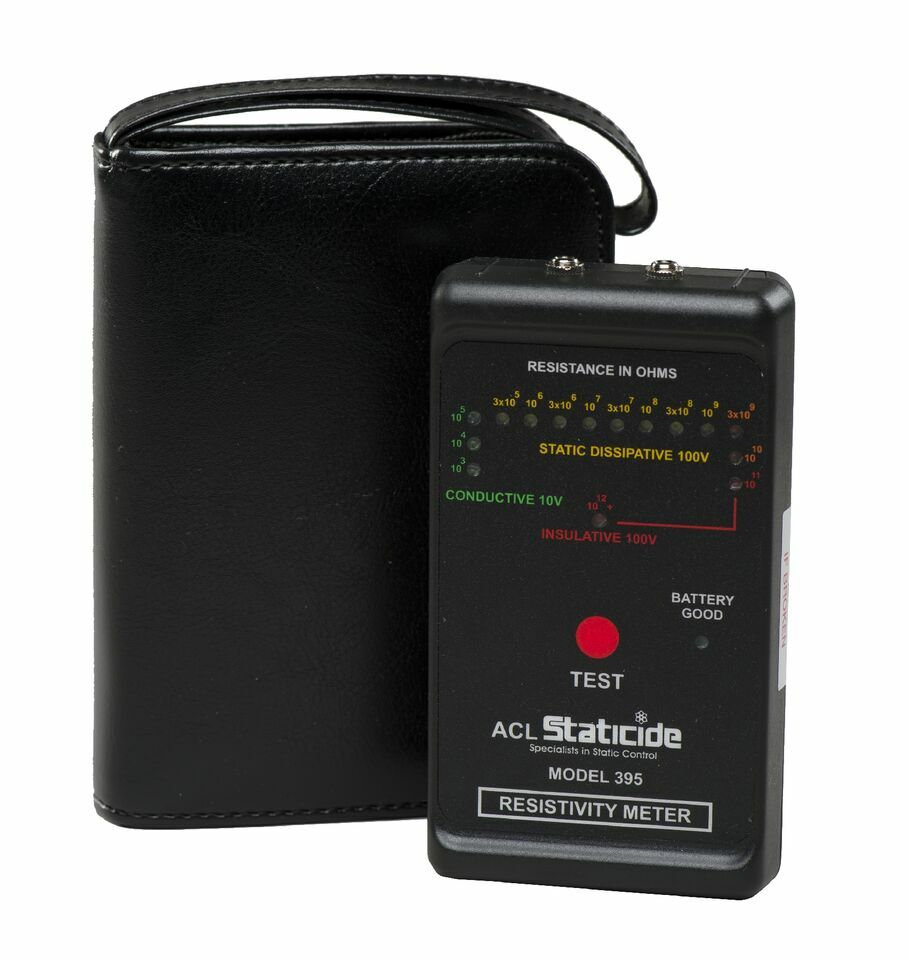
ACL Staticide ACL 395 Surface Resistivity Meter Includes Tester and Carrying Case 1 Unit
ACL Staticide ACL 395 Surface Resistivity Meter Includes Tester and Carrying Case 1 Unit
ACL 395 is a handheld surface resistivity meter used for checking static-control materials and work areas. This listing identifies one tester with a carrying case. Its color-coded LED logarithmic display and conductive rubber contact rails support quick checks on suitable flat surfaces. Consult the linked manual for measurement procedures and electrode requirements before using readings for formal ESD records.
Best Uses / Applications
- ESD workstation checks: screen suitable mat and work-surface materials as part of a documented audit routine.
- Packaging reviews: compare surface readings on suitable static-control packaging materials.
- Production-floor spot checks: use the portable tester and case for repeatable checks when following the maker's test procedure.
Use the appropriate electrodes, test voltage, environmental conditions, and procedure for the standard you are applying. Optional 5 lb electrodes are not listed as included here; verify accessories and calibration documentation before ordering if your program requires them.
Specifications and Contents
| Model / SKU | ACL 395 |
|---|---|
| Display | Color-coded LED logarithmic scale with half-decade indications, per existing product information |
| Contact | Conductive rubber rails, per existing product information |
| Listed contents | Tester and carrying case; one unit |
| Additional electrodes | Check separately for the test procedure you need |
Frequently Asked Questions
What is included?
The product title lists one ACL 395 tester and a carrying case. Confirm any other accessories and documentation before purchase.
Can I use it to check ESD mats?
It is listed for surface resistivity checks. Review the manual and your facility's testing standard for correct electrodes and setup.
Are 5 lb probes included?
They are described as optional in the existing product information and are not listed in the product title as included.
Does it come with a calibration certificate?
A certificate is not confirmed by the listed package contents. Ask MTE to verify documentation if it is required for your audit.
Does a reading by itself certify a surface to an ESD standard?
No. Use the applicable procedure and document test conditions, electrodes, and results.


