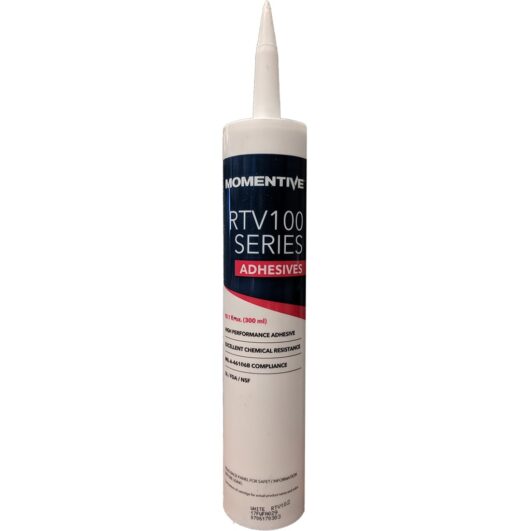

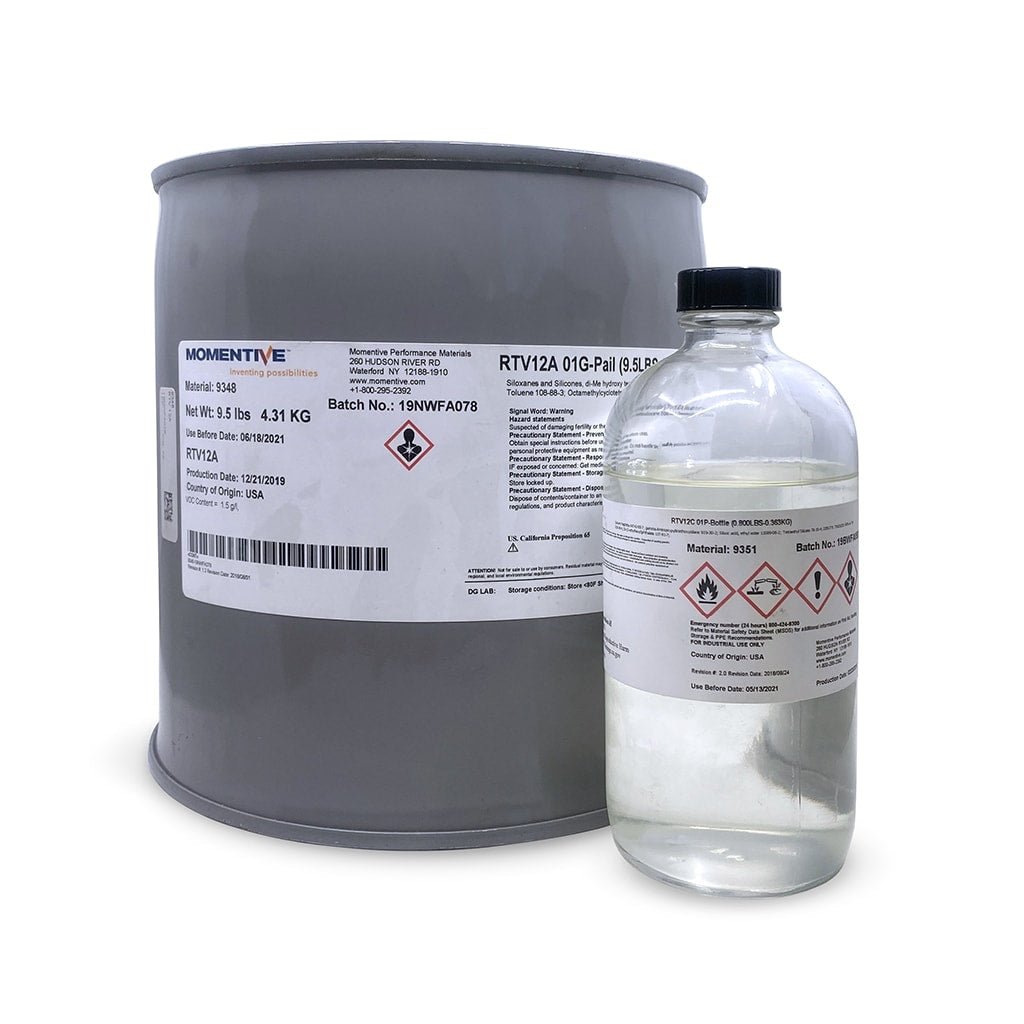
MG Chemicals RTV12A-1G Clear Silicone Potting Base, 1 Gallon Pail
MG Chemicals RTV12A-1G Clear Silicone Potting Base, 1 Gallon Pail
MG Chemicals RTV12A-1G is the clear silicone base component of the two-part RTV12 potting system, supplied in a 1-gallon pail. Mixed with RTV12C curing agent, it cures at room temperature to a soft, pliable rubber for potting and encapsulating electrical and electronic assemblies. Its clarity permits component identification, while its flowability helps fill spaces around complex assemblies.
Ordering note: This listing identifies the RTV12A base, not a matched base-and-catalyst kit. RTV12C curing agent is required; confirm curing-agent supply before ordering. RTV products are not stocked. Please call for current pricing and lead times.
Key Features
- Clear cured silicone allows visual observation during pouring and later component identification.
- Soft, rubbery cure cushions assemblies against mechanical shock and vibration.
- Low-viscosity base flows around complex components.
- Room-temperature, deep-section cure without additional heating or moisture.
- Designed for primerless adhesion to many metals, plastics and ceramics; evaluate adhesion on your specific substrates.
- Repairable material supports component access and replacement when needed.
- Formulated to minimize copper corrosion.
- Suitable for hand or machine mixing using the manufacturer’s instructions.
Technical Specifications
| Property | Specification |
|---|---|
| Part number | RTV12A-1G |
| Package | 1-gallon pail of RTV12A base |
| System | Two-component silicone potting and encapsulating compound |
| Required curing agent | RTV12C |
| Base-to-curing-agent ratio | 20:1 by weight; do not substitute a volume ratio |
| Base appearance | Clear, slight haze |
| Typical base viscosity | 1,300 cP |
| Typical base specific gravity | 1.00 |
| Cure method | Room temperature after mixing with RTV12C |
| Cured consistency | Soft, pliable rubber |
| Typical Shore A hardness | 18 at 3 days |
| Typical dielectric strength | 400 V/mil |
| Typical dielectric constant | 3.0 at 1 kHz |
| Typical volume resistivity | 1.0 × 10¹³ Ω·cm |
Values are typical manufacturer data, not guaranteed acceptance specifications. Cured electrical values depend on the technical data sheet’s specimen and cure conditions. Validate mixing, cure, adhesion and electrical performance for your assembly.
Best Uses / Applications
- Potting electronic assemblies where visual component identification is desirable.
- Encapsulating electrical components that benefit from a soft, cushioning material.
- Filling complex assemblies and deep sections using a two-component room-temperature-cure system.
- Applications requiring electrical insulation and the ability to access components for repair.
- Silicone casting applications after process and substrate evaluation.
Selection Comparison
| Selection consideration | RTV12A / RTV12 system | Alternative approach |
|---|---|---|
| Package completeness | Base identified here; RTV12C required | A matched kit explicitly supplies base and curing agent together |
| Component visibility | Clear cured material supports identification | Opaque potting compounds obscure encapsulated components |
| Cured feel | Soft, pliable silicone rubber | Rigid epoxy systems offer a different mechanical response; compare product-specific data |
| Cure planning | Mix two components by weight; room-temperature deep-section cure | One-part systems may require moisture or heat; follow the selected product’s instructions |
Frequently Asked Questions
Is RTV12A-1G a complete two-part kit?
This listing identifies a 1-gallon pail of RTV12A base. RTV12 requires RTV12C curing agent. Do not assume the catalyst is included; confirm supply before ordering.
What is the RTV12 mixing ratio?
The manufacturer specifies 20 parts RTV12A base to 1 part RTV12C curing agent by weight. Measure accurately and follow the technical data sheet for mixing and cure procedures.
Does it need heat or atmospheric moisture to cure?
After mixing with the specified curing agent, RTV12 cures at room temperature, including in deep sections, without additional heating or moisture.
Does RTV12 cure hard like an epoxy?
No. It forms a soft, pliable silicone rubber. This cushioning behavior is useful where mechanical shock and vibration are concerns, subject to application testing.
Can I see the components after potting?
The clear cured material provides see-through properties that support component identification. The base itself is described as clear with slight haze.
Will it bond without primer?
RTV12 is designed for primerless adhesion to many metals, plastics and ceramics. That is not a guarantee for every surface; evaluate adhesion using your actual substrates and preparation process.
Is this product stocked?
RTV products are not stocked. Contact MTE Solutions for current pricing and lead times before planning production.
Related Products & Resources
Compare encapsulating and potting compounds, browse the MG Chemicals range, or explore our Adhesives, Dispensing & UV Cure Systems resource hub.
Product Warning
This product can expose you to chemicals including toluene, which is known to the State of California to cause birth defects or other reproductive harm. For more information go to www.P65Warnings.ca.gov.