

Humidity, Temperature & Static: How Environment Impacts ESD Risk and Cleanroom Performance
Quick Answer
Humidity is the single most impactful environmental variable for ESD risk: below 30% RH, static generation increases dramatically and dissipation slows — a person walking across vinyl flooring can generate 12,000V at low humidity vs. 250V at 65% RH. Above 60% RH, ionic contamination and corrosion risk on PCBs increases significantly. The target range for most ESD-sensitive electronics manufacturing is 45–55% RH at 68–75°F (20–24°C). Humidity indicator cards provide instant visual confirmation of humidity inside sealed packaging and storage — a pink dot means the desiccant is saturated and the package must be resealed before use.
ESD ControlQualityAudit-Ready
In cleanrooms and electronics manufacturing, small environmental changes can make a big difference. Humidity and temperature directly influence electrostatic discharge (ESD) risk, contamination levels, and operator comfort. Keeping these in balance helps protect sensitive components, improve yields, and maintain compliance.
Why Humidity & Temperature Matter for ESD and Cleanroom Performance
- Dry air (<30% RH): static generation increases dramatically and dissipation slows — ESD events become more frequent and more damaging.
- High humidity (>60% RH): promotes condensation and corrosion on sensitive PCB surfaces; accelerates ionic contamination and electrochemical migration.
- Target range: 45–55% RH and stable temperatures of 68–75°F (20–24°C) for most ESD-sensitive processes.
- Temperature swings cause thermal expansion and contraction that can crack solder joints and delaminate PCB layers over time.
Monitor What Matters
Measuring and documenting humidity, temperature, and surface resistance is core to any ESD control program. Routine checks help catch environmental drift before it impacts yield — a single low-humidity day can cause a spike in ESD events that is only visible in the data if you are monitoring.
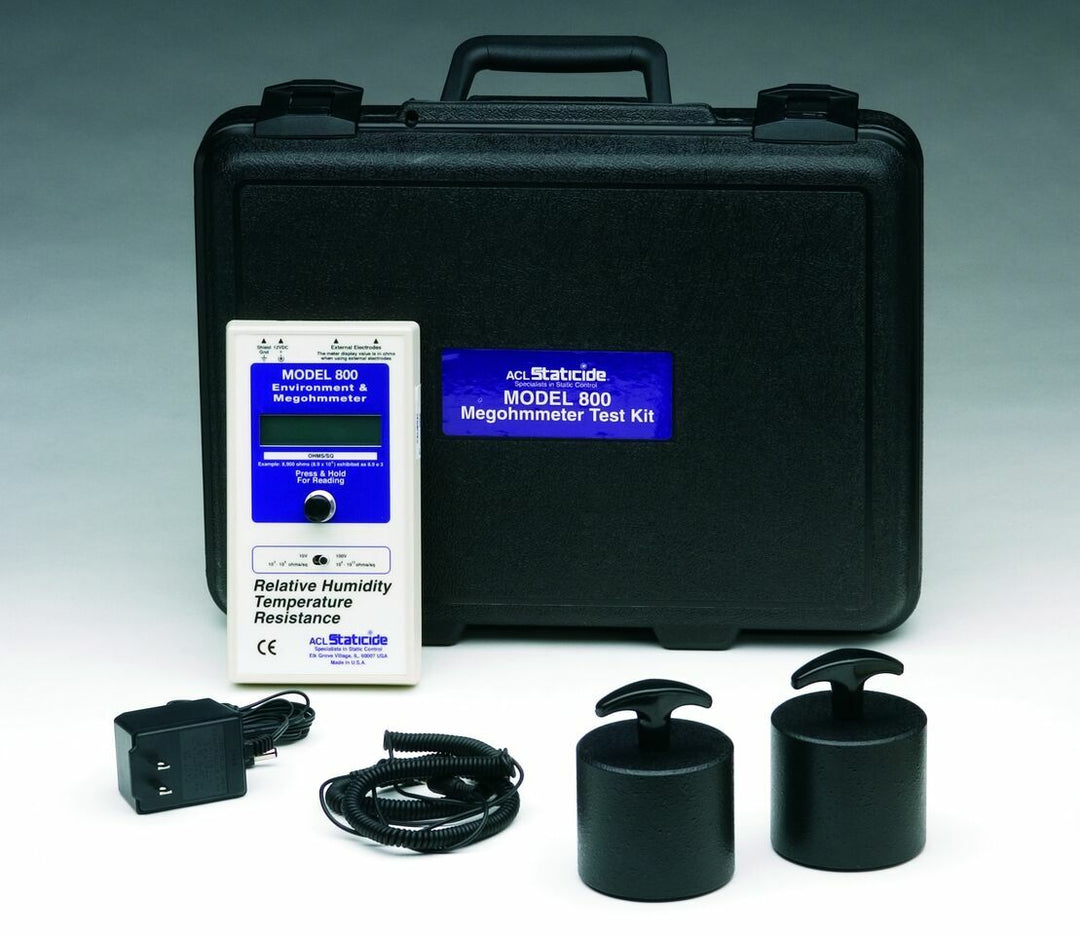
ACL Staticide ACL 800 Digital Megohmmeter
Verify resistance of mats, flooring, and wrist straps at the point of use — and log results alongside ambient conditions to strengthen your ESD records.
Simple, Visual Humidity Checks
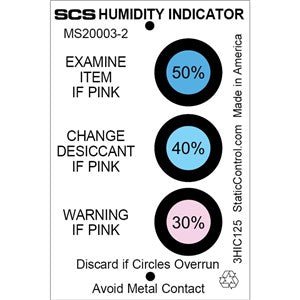
Humidity can swing with seasons, HVAC settings, and process heat. A fast, low-cost way to confirm conditions inside packages and storage is to use humidity indicator cards (HICs) — each dot changes color at a specific RH level, giving technicians an instant visual readout without instruments.
Humidity Indicator Cards – Collection
Each dot changes color at a specific RH level, giving technicians an instant visual readout for sealed packaging, storage cabinets, or incoming inspection.
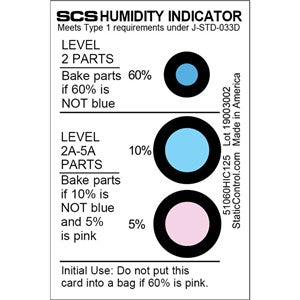
Humidity Indicator Card – 3-Spot (125/Can)
A compact variation for sealed packaging or storage containers — simple, cost-effective, and perfect for verifying humidity in ESD-sensitive environments.
Create a Balanced Environment
- Integrate monitoring: Check RH and temperature during regular ESD audits and log results with date and location.
- Correlate data: Review environment logs with ESD test results and yield data to spot trends before they become excursions.
- Prevent drift: Add humidification/dehumidification where seasonal swings are large — winter heating and summer air conditioning are the most common causes of RH excursions.
- Train teams: Include environment awareness in ESD training and daily walkdowns — operators should know the target RH range and what to do when it’s out of spec.
Frequently Asked Questions About Humidity, Temperature & ESD
What humidity level is recommended for ESD-sensitive electronics manufacturing?
The recommended humidity range for ESD-sensitive electronics manufacturing is 45–55% RH at 68–75°F (20–24°C). Below 30% RH, static generation increases dramatically and dissipation slows — ESD events become more frequent and more damaging. Above 60% RH, ionic contamination and corrosion risk on PCB surfaces increases. ANSI/ESD S20.20 does not mandate a specific humidity level but requires that the ESD control program address environmental conditions that affect ESD risk.
How does low humidity increase ESD risk?
At low humidity, the thin layer of moisture that normally coats surfaces and provides a conductive path for static charge dissipation is absent. Without this moisture layer, charge accumulates on surfaces and personnel rather than dissipating gradually. A person walking across vinyl flooring can generate 12,000V at 20% RH vs. 250V at 65% RH — a 48× difference. This is why ESD events are more common in winter when heating systems dry the air, and why facilities in dry climates require more aggressive ESD controls.
What is a humidity indicator card and how does it work?
A humidity indicator card (HIC) contains cobalt-based or cobalt-free chemical dots that change color at specific relative humidity levels — typically from blue (dry) to pink (humid). They are placed inside sealed moisture barrier bags with desiccant to monitor humidity during storage and shipping of moisture-sensitive devices (MSDs). A pink dot indicates that the humidity inside the sealed package has exceeded the threshold, meaning the desiccant is saturated and the package must be resealed with fresh desiccant before the components can be used. HICs are required by IPC/JEDEC J-STD-033 for MSL 2+ components.
What environmental monitoring products does MTE Solutions carry?
MTE Solutions carries environmental monitoring products including humidity indicator cards (SCS, single-use and multi-spot formats), digital megohmmeters (ACL Staticide ACL 800) for surface resistance verification, wrist strap testers, and ESD audit kits. Humidity indicator cards are available in 3-spot and 5-spot formats for sealed packaging and storage cabinet monitoring. All products are available with technical documentation to support ANSI/ESD S20.20 and IPC/JEDEC J-STD-033 compliance.
Maintain your program with MTE’s full line of Static Control Products. Need help matching tools to your requirements? Contact us.
Related Resources:


